
When Is a Dog Considered a Senior? Age Guide (Vet Verified)

Watching your dog slow down a little, sleep more or show the first flecks of grey around the muzzle can bring mixed feelings. It’s a natural part of life, but it’s also a signal that your dog’s needs are beginning to shift. Knowing when your dog is considered a senior is the first step to making sure their golden years are as healthy and comfortable as possible.
When Is a Dog Considered a Senior? – The Short Answer
When is a dog considered a senior? There is no single answer as it depends on size and breed. Generally, senior status begins in the last 25% of a dog’s expected lifespan. Large and giant breeds can become seniors as early as 6 years old, while small breeds may not reach this stage until 10 to 12 years.
Key Takeaways
- When a dog is considered a senior depends on their size and breed, not a fixed age
- Large and giant breeds age faster, reaching senior status as early as 6 years; small breeds may not get there until 10-12 years
- Senior dogs have changing needs in terms of veterinary care, nutrition, exercise and monitoring
- Common age-related health risks include arthritis, dental disease, weight changes, cancer and cognitive decline
- Continuous monitoring of activity, rest, heart rate and resting respiratory rate can help detect early changes before they become serious
When Is a Dog Considered a Senior?
There is no universally agreed single age at which a dog becomes a senior. According to the 2023 AAHA Senior Care Guidelines, the term “senior” is generally applied to pets in the last 25% of their estimated lifespan. Rather than a fixed number, it reflects a life stage – one that brings changing physiological needs and increased vulnerability to certain health conditions.
This means the question of “when is a dog considered a senior” has different answers depending on who you ask and which dog you’re asking about. What’s consistent across guidelines is that this transition deserves attention: senior pets make up around 44% of the pet population, making it one of the most important life stages in veterinary care.
“I got the Maven sensor for my 14-year-old Chihuahua mix with heart and trachea issues. It gave me back peace of mind – I can track her RRR, BPM, drinking, and activity anytime and know instantly if something’s wrong. Highly recommend!”

★★★★★
Chiara De Luca
Titti
How Does Size and Breed Affect Senior Age?

Size is the single most important factor in determining when a dog enters their senior years. Larger dogs age more quickly and have shorter lifespans, meaning they reach senior status earlier than their smaller counterparts.
As a general guide based on body weight:
- Under 11 kg (small breeds): senior from around 11 years
- 11 to 25 kg (medium breeds): senior from around 8 years
- 25 to 40 kg (large breeds): senior from around 8 years
- Over 40 kg (giant breeds): senior from around 6 years
Larger dogs are considered to reach geriatric stages some 5 years before the smallest dogs, a finding consistently supported across veterinary research. Small breeds such as Jack Russell Terriers have a median age at which vets first describe them as “old” of around 14 years, while breeds like Cocker Spaniels are described as elderly at a younger median age of around 11.7 years.
Breed matters too, not just size. Dogs with known health predispositions may begin to show age-related changes earlier than others of the same weight class. Pets with chronic health issues or who have experienced significant health challenges may age earlier than their peers, regardless of breed or size.
“Dogs age at different rates depending on their size and breed, but subtle changes in activity and rest patterns often begin before owners realize their dog is entering their senior years. Monitoring these trends can help support healthier aging.” – Joana Babo, DVM, Veterinarian at Maven Pet
What Changes Happen as Dogs Become Seniors?
As dogs transition into their senior years, both their body and behavior gradually shift. Although senior dogs need more rest and may prefer a slower pace of life, movement continues to play an important role in maintaining mobility and quality of life.
Common changes to expect include:
- Reduced energy and stamina: less enthusiasm for long walks or vigorous play
- More sleep and rest: longer naps and slower recovery after activity
- Changes in appetite or weight: either weight gain from reduced activity or weight loss from metabolic changes
- Sensory decline: gradual loss of hearing, vision or sense of smell
- Stiffer movement: especially after rest, or in cold or damp conditions
- Behavioral changes: some dogs become more anxious, clingy or less responsive
Many of these changes are gradual and easy to miss, or even to dismiss as “just getting old.” But the veterinary team should actively educate clients to avoid dismissing age-related changes as merely “old age”, as many underlying conditions are treatable when caught early.
What Health Risks Increase With Age?

Senior dogs face a higher prevalence of certain health conditions. Based on analysis of veterinary health records from over 800 senior dogs, the most commonly recorded conditions in older dogs were weight-related issues, musculoskeletal problems, dental disease, skin conditions and digestive problems.
Key age-related health risks include:
- Dog arthritis: one of the most common senior dog conditions, causing stiffness, pain and reduced mobility
- Dental disease: the odds of dental disease increase with every year of age, and tartar was the single most common finding in the senior dog health record study above
- Weight changes: both obesity and unintended weight loss become more common and can signal underlying illness
- Cognitive dysfunction: approximately 14-22.5% of dogs older than 8 years show signs of age-related cognitive impairment
- Heart disease, kidney disease, and cancer: all increase in prevalence with advancing age
Aging pets are more prone to these conditions and increased veterinary visits and screening tests can lead to early disease detection and more effective management and treatment.
How Should You Care for a Senior Dog?
Caring for a senior dog well means adjusting several aspects of their routine:
- Increase veterinary check-ups: senior dogs benefit from visits every 6 months rather than annually, including blood work, urinalysis, blood pressure measurement and physical examination
- Adjust diet and nutrition: senior dogs generally need fewer calories but may need more protein to maintain muscle mass; ask your vet for and condition-specific recommendations
- Adapt exercise: regular, low-impact activity helps keep joints mobile and muscles strong without causing pain
- Modify the home environment: non-slip rugs, ramps, orthopedic beds and raised food bowls can significantly improve comfort and confidence for dogs with mobility issues
- Monitor for pain: many dogs show only subtle signs of chronic pain, such as personality changes, reluctance to be touched or altered posture; watch closely and report any concerns
- Continue vaccinations and parasite prevention: vaccination continues to play an important role in preventing diseases in the later years of a dog’s life
Why Does Monitoring Matter More in Senior Dogs?
One of the biggest challenges with senior dog health is that changes often develop gradually and are therefore easy to miss. Research has shown that in a prospective health screen of dogs over 9 years of age, at least one issue was recorded in their veterinary health records that the owner had not noticed.
Tracking measurable indicators over time, such as resting respiratory rate, activity and sleep levels, and heart rate, gives you an objective picture of how your dog is doing day to day, and not just during a vet visit. Quality of life in senior dogs can be assessed through key areas including activity level, appetite and weight, social interaction and comfort, all of which can shift subtly before obvious symptoms appear.
How Maven Pet Helps
The Maven pet health tracker is designed specifically for the kind of continuous, longitudinal monitoring that senior dog care requires. Rather than relying on occasional observations, Maven builds a personalized baseline for your dog and alerts you when something shifts.

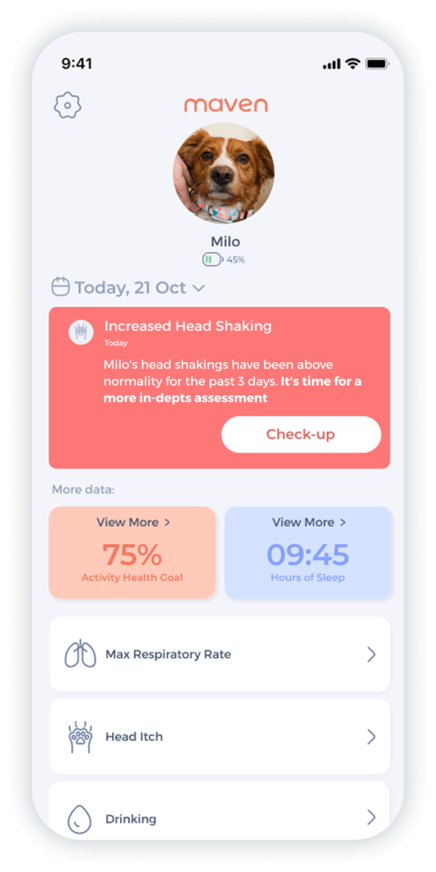
Monitor heart rate, respiratory rate, activity & rest, drinking, itch behavior.
Using the Maven pet health app alongside a dog health tracker, you can monitor:
- Activity levels: tracks gradual declines in mobility or energy that can signal early joint disease or fatigue
- Rest patterns: identifies increased sleep or disrupted rest cycles associated with pain or cognitive changes
- Heart rate trends: helps detect early cardiovascular changes common in senior dogs
- Resting respiratory rate: a key early indicator of respiratory or cardiac stress
- Head shaking behavior: helps flag skin or discomfort changes that may go unnoticed
- Water intake: shifts in drinking habits can indicate kidney disease, diabetes or other age-related conditions
A dog activity tracker gives you the data your vet needs and not just a snapshot from a single appointment. It provides a trend over weeks and months that tells the real story of how your senior dog is aging.
FAQ (Vet-Reviewed)
There is no single age – it depends on size and breed. As a general guide, giant breeds (over 40 kg) are seniors from around 6 years, large and medium breeds from around 8 years, and small breeds from around 10-12 years. Senior status is generally defined as the last 25% of a dog’s expected lifespan.
A senior dog is typically one who has entered the last quarter of their expected lifespan. For most dogs this falls somewhere between 6 and 12 years depending on their size. A small breed dog at 7 may still be in their prime, while a giant breed dog at the same age may already be considered geriatric.
Small breeds (under 11 kg) are generally considered seniors around 11 years; medium breeds (11-25 kg) around 8 years; large breeds (25-40 kg) around 8 years; and giant breeds (over 40 kg) as early as 6 years. These thresholds reflect the fact that larger dogs age faster and have shorter average lifespans.
Yes. Small breeds tend to live longer and age more slowly, meaning they reach senior status later – often not until 10 to 12 years. In contrast, giant breeds may show age-related changes as early as 5 to 6 years. This is one of the most well-established patterns in canine aging.
Common changes include reduced energy and stamina, more time sleeping, stiffness after rest, changes in appetite or weight, gradual sensory decline and occasional behavioral shifts such as increased anxiety or reduced responsiveness. Many changes are subtle at first, which is why consistent monitoring is so valuable.
Conclusion
When is a dog considered a senior? The honest answer is: it depends on your dog. Size, breed and individual health history all play a role. But what’s consistent across every dog is that the senior life stage brings real changes – and real opportunities to intervene early, adjust care, and protect quality of life.
Whether your dog is approaching their senior years or already in them, staying attuned to gradual shifts in their behavior, energy and health is one of the most valuable things you can do. The earlier those changes are noticed, the more options you have.
Maven Pet focuses on improving the quality of life of our pets with technology, using artificial intelligence (AI) to enable proactive pet care. By accurately collecting and monitoring pet data 24/7 and flagging any irregularities, Maven Pet empowers pet parents and veterinarians to stay ahead of potential health issues, ensuring the well-being and longevity of our beloved companions.